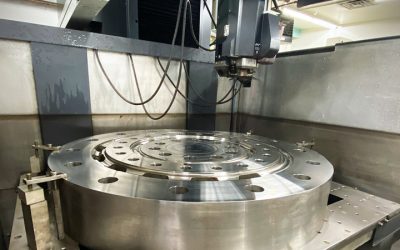
In the fast-paced world of aircraft manufacturing, precision and efficiency are essential. This industry relies heavily on CNC (Computer Numerical Control) machining, a crucial technology that has revolutionized the manufacturing of components. CNC aerospace machining is the use of computer systems to control machine tools, enabling the manufacture of complicated parts with high precision. This technology has proven essential in the aerospace industry, where even minor deviations can lead to catastrophic failures.
Understanding Computer Numerical Control Machining.
CNC machining involves a wide range of procedures, including milling, turning, drilling, and grinding, all carried out with extreme precision. A computer-aided design (CAD) model initiates the process, transforming it into a series of instructions that guide the machine’s movements. Manufacturers carry out these instructions with exceptional precision, enabling them to produce complicated designs that would be impossible to achieve with traditional machining methods. One of the most notable advantages of CNC machining is its ability to maintain consistency across several parts. Once you build a program, you can replicate it endlessly, guaranteeing that every component you produce meets the same high-quality standards. This level of uniformity is critical in aerospace applications, where components must fit flawlessly to ensure the overall safety and performance of the aircraft.
CNC machining frequently uses high-performance alloys and composites intended to resist the severe conditions of flight. To mill these materials successfully, you’ll need specific tooling and procedures. Therefore, to meet the needs of aerospace materials, CNC machining centers equip themselves with powerful cutting tools and high-speed spindles. The integration of this equipment enables firms to optimize their machining processes, lowering waste and increasing production efficiency.
Advantages of CNC Machining.
One of the most significant benefits of CNC machining is the ability to manufacture complicated parts with elaborate patterns. Aerospace components such as turbine blades, structural frames, and fuselage pieces frequently have geometries that are challenging to fabricate using traditional methods. This advanced machining process can meet these challenges, allowing engineers to push the limits of design.
The accuracy of CNC machining contributes to long-term cost savings. Manufacturers can reduce the need for rework and scrap by making high-precision parts, resulting in more effective use of materials and resources. It lowers prices and promotes sustainable production processes, which are becoming increasingly crucial in today’s ecologically sensitive world. CNC aerospace machining represents a substantial development in the manufacturing processes that drive the aerospace sector. Its capacity to manufacture high-precision components from complex designs, along with the advantages of automation and data-driven advancements, make it a vital asset in modern aerospace manufacturing. As technology advances, the role of CNC machining in this industry will definitely grow, opening the way for ever more innovative designs and improved performance in the sky. The quest for perfection in aerospace machining will continue at the top of the industry’s priorities, ensuring safety, efficiency, and a never-ending drive for progress.