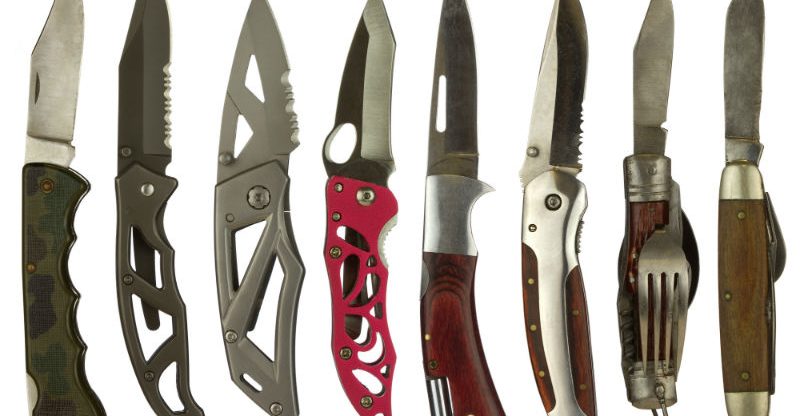
A worthwhile tactical knife for daily carry depends on three factors: blade steel that holds an edge without excessive maintenance, a dependable locking or deployment mechanism, and a size that stays comfortable in a pocket all day. These traits separate a tool built for repeated real-world use from one that is mostly decorative.
Shoppers researching Tactical Knives are typically comparing blade materials, locking systems, and carry profiles rather than looking for a single model. Out-the-front (OTF) automatic knives have become a common subcategory within this search, prized for one-handed deployment that eliminates the two-step opening motion required by traditional folders.
Blade Steel and Why It Affects Daily Performance
Steel choice shapes how often a blade needs sharpening and how it holds up against moisture exposure.
• D2 tool steel is valued for high wear resistance and strong edge retention, though it is more prone to corrosion without regular care, according to a knife steel profile from Knife Informer .
• 440C stainless steel trades some edge-holding ability for better rust resistance, making it a practical option in humid or outdoor conditions.
• Aluminum or aircraft-grade handle materials reduce overall weight without sacrificing grip security during use.
Neither steel is universally “better.” The right choice depends on climate, frequency of use, and how much sharpening maintenance a carrier is willing to do.
Deployment Mechanisms: OTF, Folding, and Fixed Blades
How a blade opens affects both speed and safety in daily situations.
|
Deployment Type |
Opening Speed |
Typical Use Case |
Maintenance Needs |
|
OTF Automatic |
Fastest (one-handed, push-button) |
EDC, fast-access tasks |
Internal mechanism cleaning |
|
Folding (manual) |
Moderate |
General utility, budget EDC |
Pivot lubrication |
|
Fixed Blade |
Immediate (no deployment) |
Outdoor, hunting, survival |
Sheath care, simple upkeep |
OTF knives deploy with a push of a button rather than a two-handed opening motion, which is the main reason they are frequently chosen for fast-paced or demanding environments. A secure locking mechanism on any automatic blade is important for preventing accidental deployment during normal carry.
Size, Weight, and Carry Comfort
A tactical knife that is uncomfortable to carry will not get carried consistently, regardless of blade quality.
1. Overall length between roughly 6 and 9 inches tends to balance utility with pocket discretion.
2. A deep-carry pocket clip keeps the knife low-profile and reduces printing through clothing.
3. Blade lengths around 2.5 to 3.5 inches cover most everyday cutting tasks without triggering length restrictions in some jurisdictions.
4. Lighter handle materials, such as CNC-machined aluminum, reduce fatigue from all-day pocket carry.
Buyers across the USA should also confirm local and state regulations on blade length and automatic-opening mechanisms before purchasing, since rules vary by jurisdiction.
Viper Tec Inc, a Miami-based manufacturer, produces automatic OTF knives built around steels such as D2 and 440C with aluminum handle construction. Specifications, available blade styles, and current models are published through Viper Tec Inc.
Frequently Asked Questions
What is the main advantage of an OTF knife for everyday carry? OTF knives deploy the blade with a single push-button motion, which removes the need for a two-handed opening action required by standard folding knives.
Is D2 steel or 440C better for a daily carry knife? D2 generally holds an edge longer, while 440C resists corrosion better; the better option depends on climate and how often the owner is willing to sharpen and maintain the blade.
Do all states allow automatic knives for everyday carry? Rules on blade length and automatic-opening mechanisms differ by state and locality, so confirming current regulations before carrying is a practical first step.
How often should a tactical knife be cleaned or maintained? Automatic mechanisms benefit from periodic cleaning to remove lint and debris, while non-stainless steels like D2 need light oiling to limit corrosion.
Specifications and current model listings for Viper Tec Inc are published for reference by buyers comparing blade steel and deployment options.